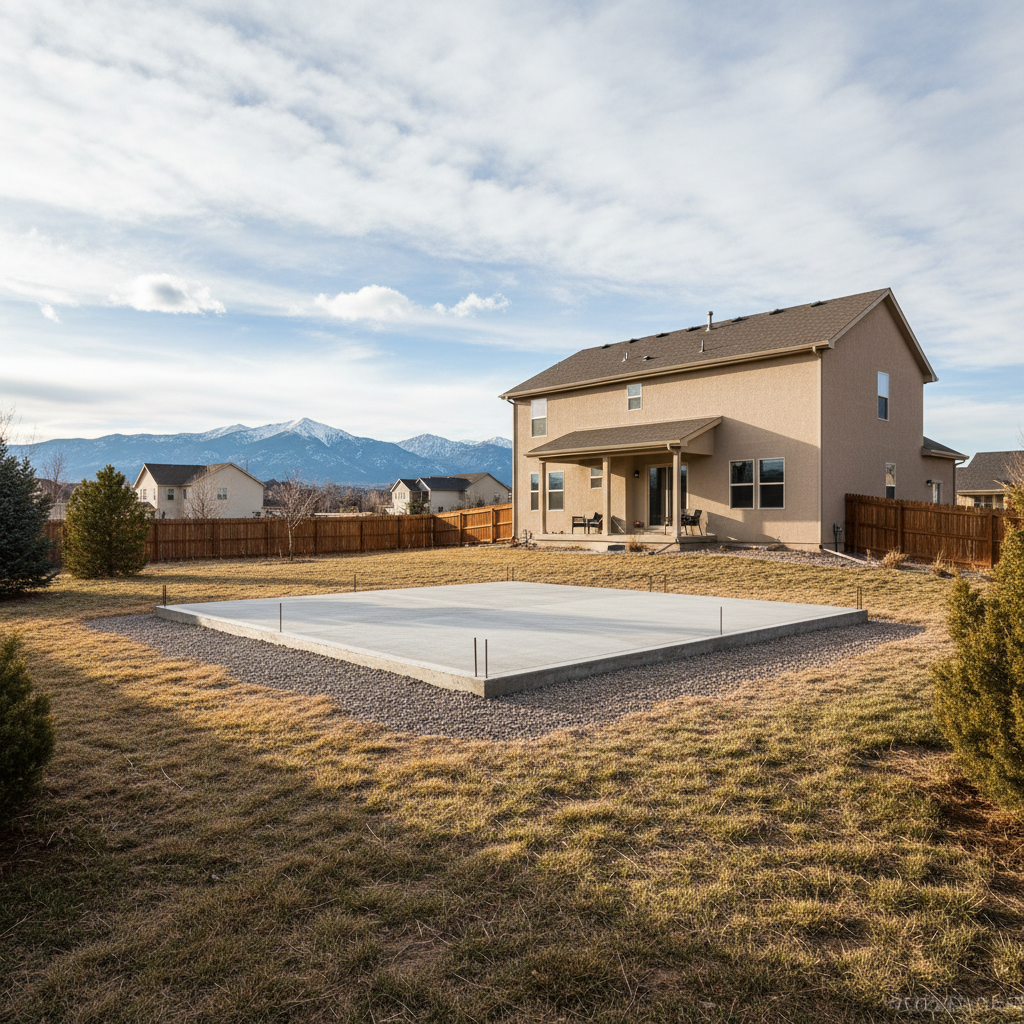
Is Your Shed Foundation Really Ready for Parker's Ground?
You've decided to add a shed to your property. Maybe it's for extra storage, a workshop, or even a dedicated space for your hobbies. That's great! But before you even think about the walls or roof, you've got to get the foundation right. And here in Parker, Colorado, that's not always as straightforward as you might think.
I've seen a lot of sheds go up over the years, and I've seen even more problems crop up when folks cut corners on the foundation. It's not just about pouring some concrete and calling it a day. Our local conditions, from the expansive clay soils common in areas like Stonegate to our freeze-thaw cycles, demand a more thoughtful approach. If you don't account for these things, you're looking at cracked slabs, shifting structures, and a whole lot of headaches down the road.
Why Our Soil is a Big Deal for Sheds
Let's talk dirt. Or, more accurately, our unique Colorado soil. Much of Parker sits on what we call expansive clay. What does that mean for your shed? Well, this type of soil acts like a sponge. When it gets wet – from rain, snowmelt, or even just irrigation – it swells up. When it dries out, it shrinks. This constant movement, sometimes several inches, can wreak havoc on a poorly constructed foundation.
You can't just put a shed directly on the ground here, especially not a larger one. You'll end up with an uneven floor, doors that stick, and eventually, structural damage to the shed itself. We've seen it happen. That's why understanding the soil composition on your specific lot is step one. Sometimes it means digging down deeper, sometimes it means adding gravel or specific fill materials to create a stable base that can handle the expansion and contraction without moving your shed along with it.
Beyond the Basic Slab: Other Foundation Options
While a concrete slab is a common choice, it's not the only one, and it's certainly not always the best one for every situation here in Parker. Depending on the size of your shed, your budget, and the ground conditions, you might consider other options:
Concrete Piers: For smaller sheds or those built on uneven terrain, concrete piers can be a great solution. They lift the shed off the ground, allowing for good airflow and minimizing direct contact with the expansive soil. This helps prevent moisture issues and keeps the shed level.
Gravel Pads: A properly constructed gravel pad, often with a sturdy timber frame, can work well for smaller, lighter sheds. The key here is proper compaction and drainage. You can't just dump a pile of gravel and expect it to hold up. It needs a good base layer, edge containment, and careful leveling.
Skids or Runners: For very small, portable sheds, treated wood skids can be an option. These allow the shed to be moved if needed. However, they still need a level, well-drained area to sit on, and they're not suitable for larger, heavier structures.
The choice really depends on what you're building and where you're building it. A small garden shed for tools might be fine on a well-prepared gravel pad, but a larger workshop with heavy equipment will definitely need something more substantial, like a reinforced concrete slab or a robust pier system.
Why Local Expertise Matters for Your Parker Shed
You might think a foundation is a foundation, no matter where you are. But I'm telling you, it's not. Someone building a shed foundation in Florida has completely different challenges than we do here in Parker. They're worried about hurricanes and high water tables; we're dealing with expansive soils, heavy snow loads, and significant temperature swings.
A local contractor, like us at Parker Shed Solutions, understands these nuances. We know what kind of frost depth we need to account for so your foundation doesn't heave during winter. We know which areas of Parker are more prone to soil movement. We've got the experience to recommend the right solution for your specific property, not just a one-size-fits-all approach.
Getting the foundation right isn't the most glamorous part of building a shed, but it's arguably the most important. It's the literal bedrock of your investment. Skimping here will cost you more in the long run, I promise you. Do it right the first time, and your shed will stand strong for decades, no matter what our Colorado weather throws at it.